Polymer Composition Effects on the Longevity of Tennis Ball Felt in Outdoor Play Environments
Ben Fischer · Oct 5, 2026
Polymer Composition Effects on the Longevity of Tennis Ball Felt in Outdoor Play Environments
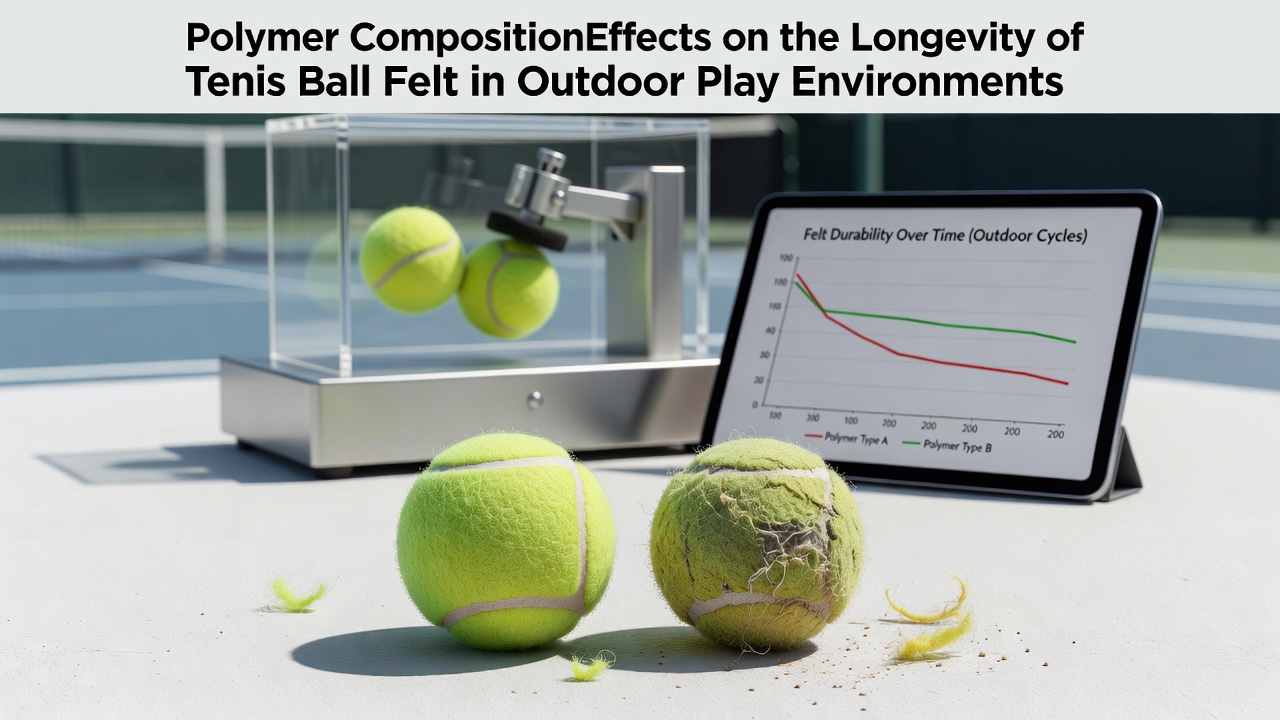
Polymer blends in tennis ball felt determine how quickly the outer covering degrades when courts sit under direct sunlight, rain cycles, and temperature swings, and researchers track these changes through controlled exposure tests that measure fiber tensile strength loss over time. Standard construction starts with a wool-nylon mix where nylon serves as the primary polymer component, yet newer formulations introduce polyester or acrylic additions that shift moisture uptake rates and ultraviolet resistance profiles.
Core Polymer Types in Felt Construction
Manufacturers select nylon 6,6 for its abrasion resistance while polyester additions reduce water absorption that otherwise swells fibers and accelerates mechanical breakdown during repeated impacts; data from accelerated weathering chambers show nylon-dominant blends lose 25 percent of initial tensile strength after 200 hours of UV exposure whereas balanced nylon-polyester ratios retain closer to 60 percent under identical conditions. Observers note that acrylic copolymers appear in select premium lines because they limit dye migration when balls encounter dew or irrigation overspray on outdoor surfaces.
Outdoor Degradation Pathways
Ultraviolet radiation breaks polymer chains through photo-oxidation, and this process speeds up when surface temperatures climb above 40 degrees Celsius on hard courts during peak afternoon play; moisture then acts as a plasticizer that softens the felt matrix, allowing abrasive clay or synthetic turf particles to embed more deeply and create micro-cuts that propagate under shear forces from racket strikes. Studies indicate that balls stored overnight in humid environments exhibit faster subsequent degradation once returned to play, since residual water molecules facilitate hydrolysis reactions within nylon segments.
Performance Metrics Across Polymer Ratios
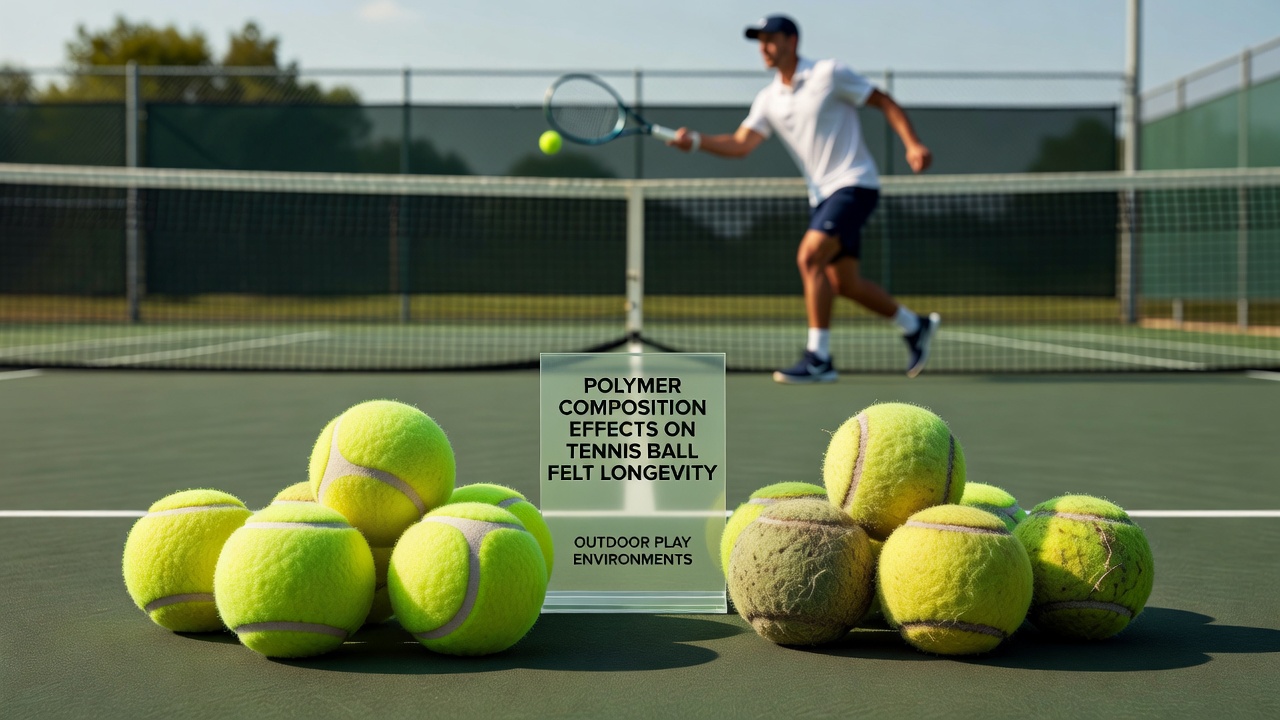
Testing protocols from the International Tennis Federation specify bounce and weight retention thresholds, yet independent labs extend these evaluations to include felt thickness measurements and color fade indices after repeated outdoor sessions. One study revealed that balls with 70 percent nylon and 30 percent polyester maintained acceptable felt coverage for 12 to 15 hours of continuous play on clay, whereas higher nylon concentrations dropped below standards by nine hours under the same conditions. Researchers at Australian universities have documented similar patterns on grass courts where lower friction reduces abrasion but UV exposure remains constant, leading to surface cracking that precedes fiber shedding.
European material scientists tracking polymer crystallinity changes report that heat from sun-exposed courts increases crystal size in polyester segments, which in turn raises stiffness and reduces the felt's ability to conform around racket strings during spin-heavy shots. This stiffness shift alters the contact patch and concentrates stress at fiber crossover points, shortening overall service life even when visible wear appears minimal.
Regional Variations in Environmental Stress
Coastal facilities experience additional salt aerosol deposition that catalyzes oxidation in nylon polymers, and Canadian research facilities have quantified a 15 percent acceleration in strength loss compared with inland sites at equivalent UV doses. Indoor facilities avoid these variables entirely, which explains why manufacturers publish separate longevity estimates for outdoor versus covered environments. Data collected during the 2025 season at multiple venues showed that polymer-modified balls required replacement 30 percent sooner on uncovered hard courts in high-UV regions than on equivalent indoor surfaces.
Conclusion
Polymer selection directly governs how tennis ball felt withstands the combined assault of ultraviolet radiation, moisture cycling, and mechanical abrasion in outdoor settings, and ongoing laboratory correlations continue to refine blend ratios that balance initial play characteristics with extended durability. Those who manage court inventories use these composition details to forecast replacement schedules that maintain consistent ball performance across varying seasonal conditions.